 RSS Feed
 Twitter

 Posts
Posts


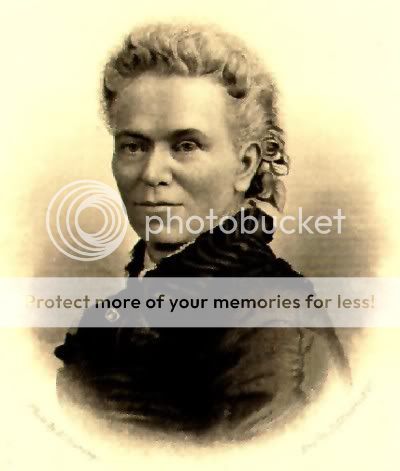
“There is a word sweeter than Mother, Home or Heaven; that word is Liberty.” - Matilda Joslyn Gage
Unless you have studied Women’s History, you probably haven’t heard of Matilda Joslyn Gage. You have, of course, heard of her two close friends, and colleagues: Susan B. Anthony and Elizabeth Cady Stanton. The three of them worked very closely in shaping the early suffragist movement, though none of them lived to legally vote. I say legally because both Susan B. Anthony and Matilda Joslyn Gage challenged the laws in New York State by voting. Anthony was prosecuted for successfully voting in the Presidential election of 1872 and twenty years later, Gage was stripped of the right to vote for school boards (and serve on them), even though New York State had allowed it for some time.
Gage was the most liberal of the three. What really struck me about Gage is that, for someone who died in 1898, some of her work would still be controversial today. It is for this reason that we don’t hear much about her – certainly not at school. Of course, we don’t hear much at school about Women’s rights at all, other than about the Women’s Rights Convention in Seneca Falls, NY in 1852 – and perhaps the constitutional amendment fight in the 1970s. Gage was largely written out of the history books of her time due to her liberal ways. An example of this is the Women’s Bible – she re-wrote the bible to be less patriarchical and more inclusive. She was also the mother-in-law of Frank Oz. It was her influence that led him to write about a utopia, led by women.
Gage was inspired by the Iroquois Nation, natives of her state of New York, to set a goal for our society – the equal leadership of the sexes. The Iroquois already showed this trait and adopted Gage as an honorary member after she spoke up against their unfair treatment. She is a woman who was far ahead of her time – but without whom we may not be where we are today.
It was the this generation of women who pushed the government – including what we know now as “civil disobedience” – including refusing to pay taxes, illegally presenting at the Centennial celebration in 1876, and protesting the Statue of Liberty at its unveiling. The majority of these women never got to vote – never felt the joy of being a citizen – and never had the Liberty that Gage so desired.
If you are interested in learning more about Gage and her place in Women’s History, I highly recommend visiting The Matilda Joslyn Gage Foundation and checking out a couple of the books for sale there. My favorite is “A Time of Protest” – the time frame is 1870-1887 – but you’d think it was during the 1960s. We too often see pictures of the suffragists as old women, sitting and looking stern. These women were not just women of words, but also women of action. They did not sit around and wait for things to happen – they made them happen. This is what Women’s history is – action. We have so much to be thankful for – but also a history to look back on and ensure that we don’t move backwards.


No comments:
Post a Comment